

R.E.A.C.H. Intelligence
Resilience • Energy • Action • Cognition • Habits
The R.E.A.C.H. Intelligence System
Human Performance Intelligence in Action
Combining artificial intelligence, behavioral science, and expert human analysis to improve performance, resilience, and decision-making in high-demand environments.
Organizations today face increasing pressure on their workforce — higher operational demands, cognitive overload, and growing stress levels.
R.E.A.C.H. Intelligence helps leaders understand the human factors driving performance and provides the insights needed to optimize outcomes across individuals, teams, and systems.
What is the R.E.A.C.H. Intelligence System?
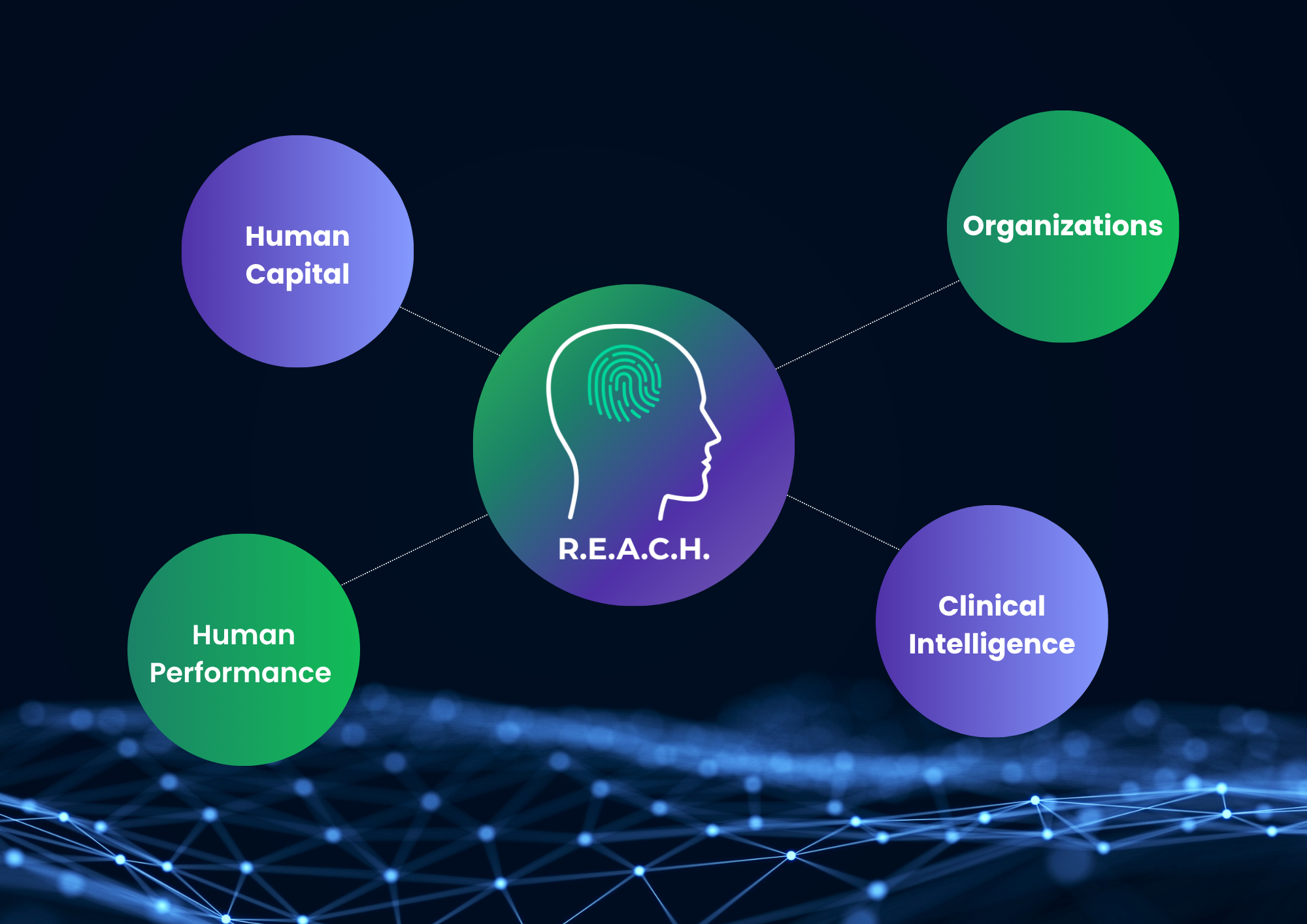
The R.E.A.C.H. Intelligence System is PerformIntel’s integrated platform for measuring, developing, and optimizing human performance.
It transforms complex behavioral and physiological signals into meaningful insights that help individuals and organizations strengthen resilience, improve decision-making, and maintain operational readiness.
The system integrates:
Behavioral science research
Physiological performance indicators
Cognitive and emotional resilience training
Intelligent analytics and performance tracking
Human expert interpreation
Together, these capabilities create a continuous performance optimization cycle that enables individuals and organizations to understand and improve how people perform under pressure.
The system combines AI-driven analytics with domain experts who interpret data, validate insights, and provide actionable recommendations. It identifies patterns and risk indicators related to stress, fatigue, cognitive performance, engagement, and recovery, helping organizations act before performance declines or risks emerge. Qualified professionals translate those signals into operational guidance and human-centered interventions.
The Four R.E.A.C.H. Intelligence Domains
-
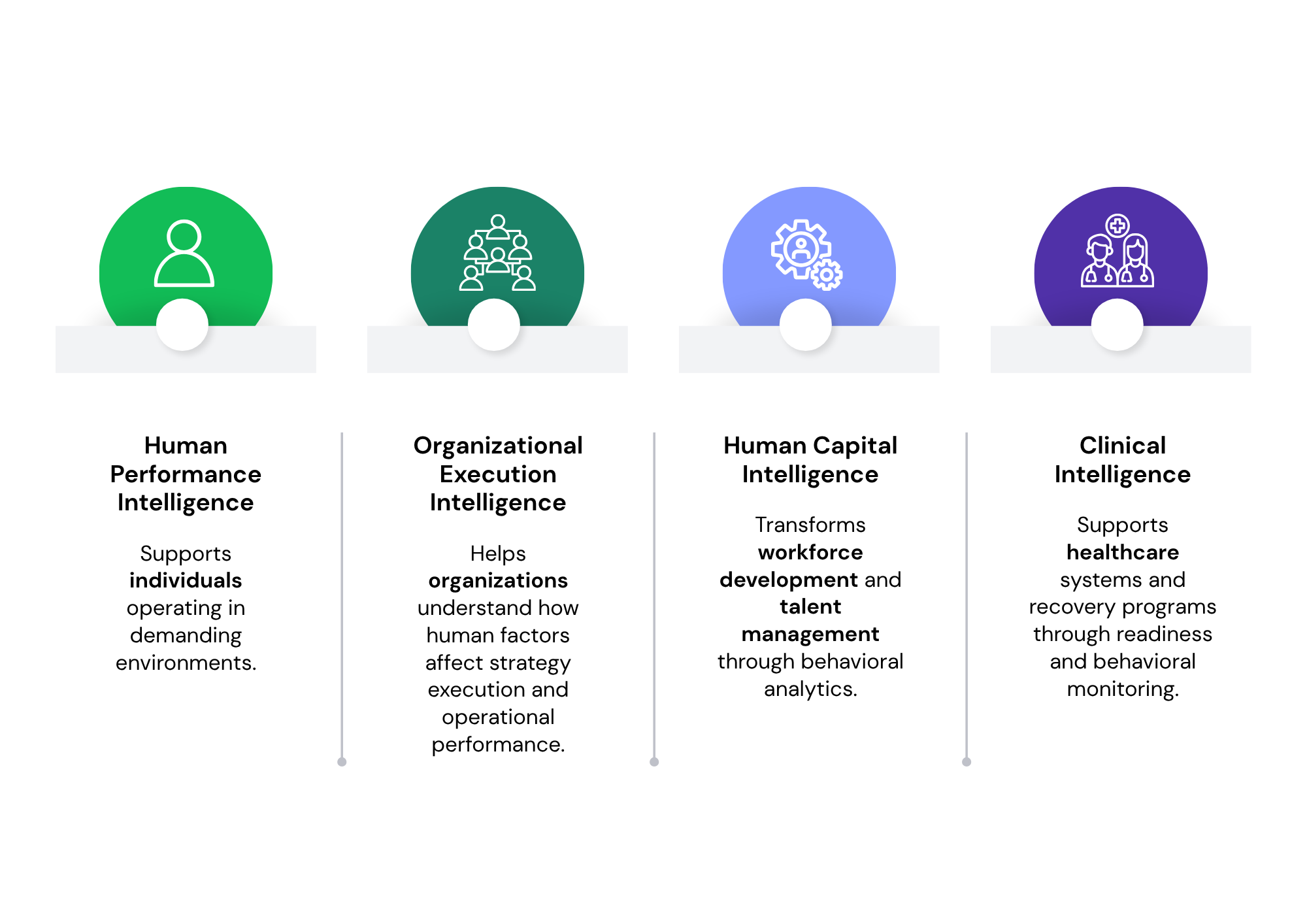
Supports individuals operating in demanding environments.
Capabilities include:
Cognitive readiness insights
Stress and resilience monitoring
Sleep and recovery optimization
Performance coaching guidance
Human Expert Layer:
Cognitive Performance Specialists and performance psychologists interpret data and guide interventions.
-
Helps organizations understand how human factors affect strategy execution and operational performance.
Capabilities:
Leadership performance insights
Team collaboration analysis
Operational stress monitoring
Workforce readiness indicators
Human Expert Layer:
Industrial-organizational psychologists, leadership experts, and human-factors specialists analyze patterns and provide recommendations.
-
Transforms workforce development and talent management through behavioral analytics.
Capabilities:
Leadership potential identification
Burnout risk monitoring
Engagement insights
Workforce development planning
Human Expert Layer:
Organizational development consultants and HR strategy specialists interpret workforce insights.
-
Supports healthcare systems and recovery programs through readiness and behavioral monitoring.
Capabilities:
Pre-surgical readiness assessments
Recovery monitoring
Behavioral health support
Rehabilitation insights
Human Expert Layer:
Physicians, clinical psychologists, and rehabilitation specialists interpret data and guide care decisions.
Example Applications of The R.E.A.C.H. Intelligence System
-
Illustrative Implementation Scenario
Scenario
A commercial airline is preparing to increase flight operations by approximately 20% during peak seasonal demand. Leadership wants to understand how the increase in operational tempo may impact pilot fatigue, crew stress levels, and maintenance workforce workload.
Because aviation safety is highly dependent on human performance, the airline explores using R.E.A.C.H. Intelligence to better understand workforce readiness before implementing the schedule expansion.
Challenge
Historically, airlines rely on traditional fatigue risk management models and post-incident analysis. However, leadership wants a more proactive way to monitor indicators such as:
Sleep disruption among pilots
Stress levels among cabin crew
Cognitive workload within operations control
Maintenance workforce fatigue during overnight turnaround operations
Without additional insight, increased operational demands could raise the risk of human-error-related incidents.
Implementation
Using R.E.A.C.H. Intelligence, the airline conducts a pilot program across several workforce groups:
Flight crews
Cabin crew
Maintenance teams
Operations control staff
The platform collects a combination of:
Sleep and recovery indicators
Stress and resilience assessments
Motivation and engagement surveys
Work schedule data
Cognitive workload indicators
The goal is to establish a human performance baseline before the operational expansion begins.
Expert Analysis
R.E.A.C.H. Intelligence insights are reviewed by a multidisciplinary team including:
Aviation safety experts
Human factors engineers
Industrial-organizational psychologists
Fatigue risk management specialists
These experts analyze patterns identified by the platform to determine where operational pressure could potentially affect workforce readiness.
Potential Outcomes
Based on the insights generated, the airline could implement interventions such as:
Adjusted crew scheduling to protect sleep cycles
Fatigue mitigation protocols for pilots
Workload balancing within operations control centers
Recovery windows between intensive duty periods
By identifying risks early, leadership could increase operational capacity while maintaining strong safety margins and workforce wellbeing.
-
Illustrative Implementation Scenario
Scenario
A government program office responsible for a large modernization initiative experiences delays in decision cycles and coordination across teams.
While the technical strategy remains sound, leadership suspects that human performance factors such as cognitive overload, leadership stress, and communication breakdowns may be affecting execution.
Challenge
Large-scale defense programs often involve:
Complex coordination between multiple organizations
High-stakes decision-making under pressure
Heavy workloads for program leadership
Without visibility into human performance dynamics, decision fatigue and communication bottlenecks can slow progress.
Implementation
R.E.A.C.H. Intelligence is deployed to analyze patterns across leadership teams and operational groups.
The system evaluates indicators such as:
Leadership workload and decision fatigue
Team collaboration behaviors
Communication patterns across program teams
Stress and resilience indicators
These insights help create a clearer picture of how human factors may influence execution performance.
Expert Analysis
Insights generated by the platform are reviewed by:
Industrial-organizational psychologists
Leadership performance specialists
Human factors experts
Organizational strategy advisors
Together, they interpret the data and identify opportunities to improve organizational performance.
Potential Outcomes
Leadership may implement interventions such as:
Structured decision-making windows
Adjusted leadership workload distribution
Communication protocol improvements across teams
Cognitive performance support for high-demand roles
These adjustments could help reduce decision delays and improve coordination across the program.
-
Illustrative Implementation Scenario
Scenario
A large healthcare system faces rising nurse burnout and increasing staff turnover following several years of high operational demand.
Leadership seeks a way to better understand workforce stress patterns and identify opportunities to support staff wellbeing while maintaining high-quality patient care.
Challenge
Healthcare organizations often struggle with:
Staff fatigue during extended shifts
Emotional stress associated with patient care
Workforce engagement challenges
Leadership pipeline shortages
Traditional workforce surveys provide limited real-time insight into these challenges.
Implementation
The healthcare system explores R.E.A.C.H. Intelligence as a workforce analytics platform to better understand behavioral and physiological indicators related to staff wellbeing.
Data collected may include:
Stress and resilience indicators
Sleep and recovery patterns
Engagement and motivation assessments
Team communication patterns
This information helps leadership identify patterns that may contribute to burnout risk.
Expert Analysis
Insights are reviewed by a team including:
Clinical psychologists
Industrial-organizational psychologists
Healthcare leadership consultants
Workforce development specialists
These experts analyze trends and identify opportunities to improve workforce support.
Potential Outcomes
Possible interventions could include:
Resilience training programs
Leadership development pathways for emerging clinicians
Improved shift scheduling practices
Targeted support resources for high-stress departments
These strategies may help improve staff wellbeing, engagement, and retention.
-
Illustrative Implementation Scenario
Scenario
A hospital is exploring new ways to improve patient recovery outcomes following orthopedic surgeries.
Clinical leadership believes that behavioral and physiological factors such as sleep quality, stress levels, and adherence to rehabilitation protocols may influence recovery timelines.
Challenge
Clinicians typically have limited visibility into patient recovery behaviors between appointments. As a result, early indicators of recovery challenges may go unnoticed.
Implementation
Using R.E.A.C.H. Clinical Intelligence, the hospital pilots a program that supports patients before and after surgery.
Patients use the platform to track:
Sleep patterns
Stress and anxiety levels
Physical activity and mobility
Adherence to rehabilitation exercises
This information provides clinicians with a broader picture of patient readiness and recovery progress.
Expert Analysis
Patient data is reviewed by a clinical care team including:
Physicians and surgeons
Clinical psychologists
Physical therapists
Nurse care coordinators
The team uses insights from the platform to guide patient support and recovery planning.
Potential Outcomes
With improved visibility into recovery behaviors, clinicians may be able to:
Identify potential complications earlier
Provide targeted behavioral support
Improve adherence to rehabilitation protocols
Enhance overall recovery outcomes
AI + Human Expertise
Human-in-the-Loop Intelligence
R.E.A.C.H. Intelligence combines the speed and scale of artificial intelligence with the judgment and experience of human experts.
Rather than replacing human decision-making, the platform is designed to augment professional expertise by identifying patterns and insights that may otherwise go unnoticed.
Why This Model Matters
Human performance is complex and influenced by psychological, physiological, and environmental factors.
While AI can identify patterns and emerging risks, human expertise is essential for understanding the broader context and determining appropriate actions.
By combining intelligent analytics with expert oversight, R.E.A.C.H. Intelligence helps organizations move from reactive problem-solving to proactive performance optimization, while maintaining trust, transparency, and responsible decision-making.
Meet the R.E.A.C.H. Intelligence Team
The R.E.A.C.H. Intelligence System is guided by experts who blend real-world experience with evidence-based mental performance science. Get to know the people behind R.E.A.C.H. Intelligence.
R.E.A.C.H. Intelligence Impact
Resilient Leaders
Leaders who think clearly under pressure and model sustainable performance for their teams.
Higher Productivity
Science-backed routines and coaching that reduce downtime and elevate output.
Enhanced Safety & Operational Reliability
Improved cognitive readiness, stress regulation, and fatigue awareness that help reduce human error.
Increased Operational Readiness
A workforce better prepared to perform under pressure, adapt to changing conditions, and sustain peak performance.
Stronger Culture
Data-informed insights that improve psychological safety, trust, and collaboration.
Quantifiable ROI
Actionable metrics tied to focus, stress, recovery, and work effectiveness.
Unlock Human Performance Intelligence
Discover how the R.E.A.C.H. Intelligence system can help your organization improve performance, protect workforce wellbeing, and achieve better outcomes.